
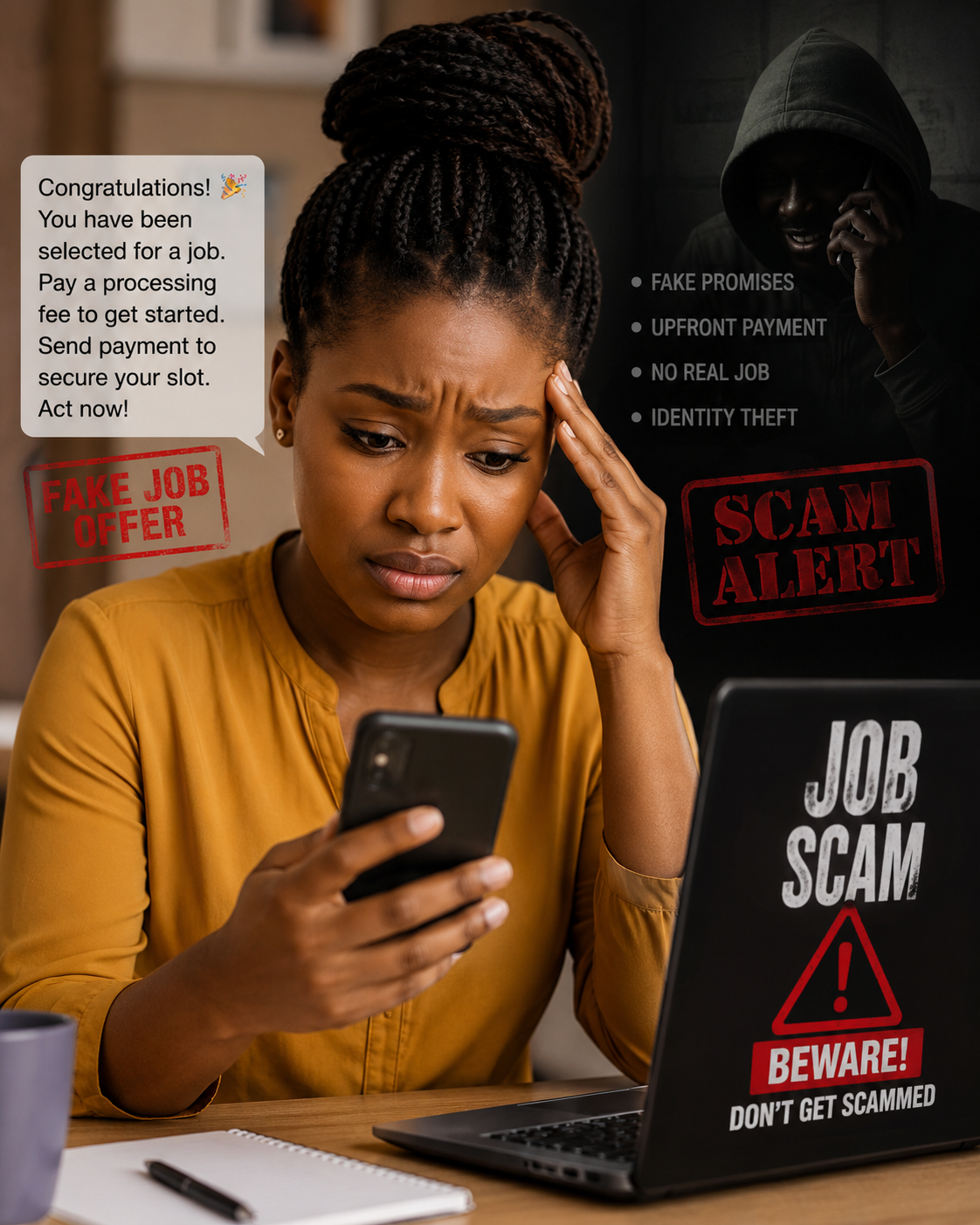
Job scams have become an alarming reality in Nigeria’s employment landscape, preying on the hopes of millions of job seekers eager for better opportunities. With rising unemployment and increased reliance on digital platforms for job hunting, fraudsters have found new and sophisticated ways to exploit vulnerable individuals.
From fake recruitment agencies demanding upfront fees to deceptive online listings promising unrealistic salaries, these scams not only drain finances but also erode trust in legitimate employment channels. This article explores the growing trend of job scams in Nigeria, how they operate, and the practical steps job seekers can take to protect themselves.
If you see these signs, run for your dear money. You’re about to be scammed.
(1) Mass recruitment madness:”We need 200 people immediately!” No serious employer hires like that.
(2) Too good to be true salaries: “Earn 200k working from home, no experience required.” Really? Come on.
(3) Minimal requirements: “Just bring your ID, we will train you.”
(4) Suspicious email addresses: If HR is writing to you from [email protected], that is not HR. That’s a scammer.
(5) No clear job description: A legit company tells you exactly what you will be doing.
Here’s how the trap works. You apply today. Tomorrow you are told, “Congratulations, you’ve qualified!
You haven’t even done an interview, but suddenly you are the perfect candidate. Then the real deal drops. Send money for medical, uniforms, or registration. That’s the scam.
Desperation can make you blind. Don’t apply to every job you see. Take a moment to check if it’s genuine.
Look up the company website. Check if the HR email matches the company domain. Search online for scam alerts. Ask around.
We live in strange times. Jobs are scarce, but that doesn’t mean you hand over your hard-earned money to fraudsters.
Stay sharp. Stay relevant. Or stay behind.